



Carbon Credit Standards for engineered Carbon Dioxide Removal

Exploring emerging engineered carbon dioxide removal standards for methodological robustness and implementation potential in developing countries
This paper by co-authored by Carbon Counts and Energy Changes explores the potential for deployment and carbon finance potential of engineered Carbon Dioxide Removal (eCDR) in developing countries, and what role these regions could play in supporting global net-zero goals through eCDR.
Together with our partners Carbon Counts, we carried out an in-depth analytical study and assessed the case for implementing engineered CDR approaches in emerging economies and developing countries. Our work examines opportunities and challenges for deployment through examining existing methodological approaches to carbon finance in eCDR, safeguards and governance aspects, and how eCDR may be further promoted by international organizations and other players.

Technical analysis and practical insights to inform the integration of engineered carbon dioxide removal into emerging carbon market frameworks
Key aspects of the paper included:
- Analysis of the potential role of developing countries as hosts for engineered CDR activities, including exploring readiness under Article 6 and examining NDC commitments to eCDR
- Identification of governance, integrity and MRV challenges associated with crediting engineered removals across borders
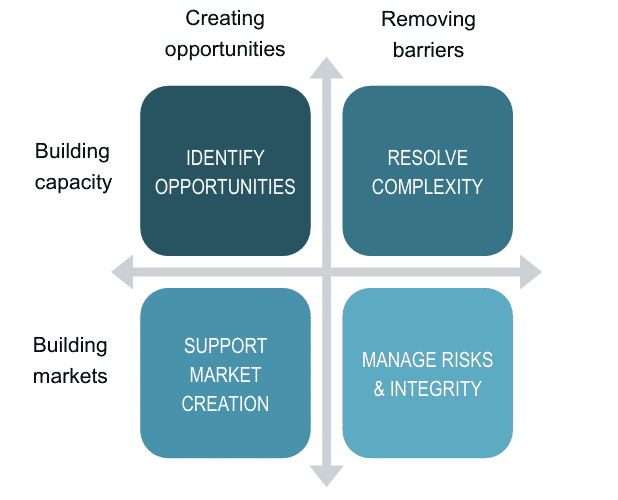
- Proposing a three-step support framework for international actors, focusing on capacity building, guidance and tool development, and early pilot purchasing of high-integrity CDR credits
The paper provides a practical and policy-relevant framework for governments, international organisations and market participants to support the responsible scaling of engineered CDR in developing countries, while safeguarding environmental integrity, transparency and long-term climate effectiveness. It contributes to the evolving global discussion on high-quality carbon removals and their role beyond conventional mitigation pathways.